June 28, 2026 - 180 views
Llandudno RNLI volunteers were called into action five times in just 24 hours after strengthening south easterly winds created difficult sea conditions and left several paddle boarders and small craft in difficulty off the North Wales coast.
Between Friday 26 and Saturday 27 June, both the inshore lifeboat and all-weather lifeboat crews from Royal National Lifeboat Institution Llandudno station were launched repeatedly as incidents developed along the coastline between Penrhyn Bay, Rhos-on-Sea and further offshore.
The first alert came on Friday afternoon after reports of a paddle boarder struggling to return to shore off Penrhyn Bay. The volunteer crew launched immediately, but the casualty had safely made it ashore before the lifeboat arrived, and the crew were stood down.
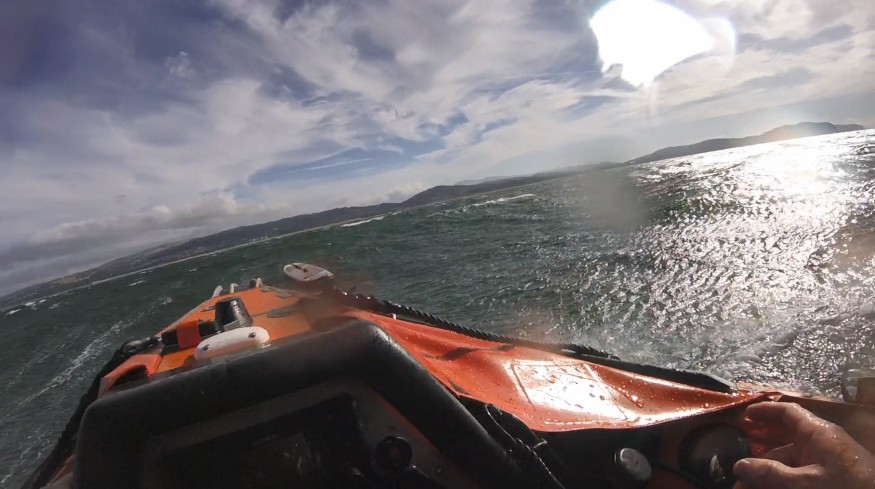
Shortly after returning to station, the inshore lifeboat was launched again following reports of two people in the water and a paddle board drifting offshore near Rhos-on-Sea. In challenging conditions with short, steep seas and Force 5 south easterly winds, the crew found both casualties already ashore. They also checked the welfare of a fishing vessel at anchor before recovering a runaway paddle board and an inflatable being blown along the coastline.
Later that day, the inshore lifeboat launched for a third time after three paddle boarders were reported being blown offshore. One person was able to return safely to shore unaided, while two others were located more than a mile out to sea, drifting towards the Gwynt y Môr wind farm. The pair, unable to paddle against the strengthening wind, were brought aboard the lifeboat along with their equipment and returned safely to shore, where they were met by HM Coastguard and Llandudno Coastguard Rescue Team.
The all-weather lifeboat was launched early on Saturday morning following reports of a red kayak drifting around 10 miles north east of Llandudno. After more than an hour conducting an expanding square search pattern, the crew were stood down when nothing was found.
Just hours later, the all-weather lifeboat was launched again after reports of two paddle boarders off Rhos-on-Sea. With conditions continuing to deteriorate, the larger lifeboat and a search by the Coastguard Rescue Helicopter were deployed. However, after shoreline searches and further checks, the pair were confirmed to have returned safely to shore and the operation was stood down.
Gavin Preston, helm and all-weather lifeboat navigator involved in several of the call-outs, said the incidents highlighted how quickly conditions can change.
“The warm weather encouraged lots of people onto the water, but the fresh south easterly wind quickly made conditions much more challenging than they appeared from the shore,” he said. “Paddle boards and other inflatables can be carried offshore surprisingly quickly, leaving people unable to paddle back against the wind.”
He urged anyone heading out to sea to check the forecast carefully, consider wind direction, wear appropriate buoyancy aids and carry a means of calling for help. He also reminded the public that anyone seeing someone in difficulty at the coast should dial 999 and ask for the Coastguard.
The Royal National Lifeboat Institution said the spate of call-outs demonstrated both the popularity of water sports during warmer weather and the importance of respecting changing coastal conditions.