August 18, 2026 - 502 views
Conwy Council has defended its decision to proceed with the closure of Ysgol Betws-y-Coed, despite continued opposition from local politicians, parents and members of the community.
Janet Finch-Saunders MS, who represents Bangor, Conwy and Môn, has written to Conwy Council Leader Councillor Julie Fallon calling for urgent action to prevent the school from closing.
But Cllr Fallon has told her that she will not intervene to overturn the Cabinet's decision, saying the cost of educating each pupil at the school is unsustainable.
She said: “The cost per pupil is the second highest in the whole of Wales and is unsustainable. Education will work with families to ensure their transition, when the time comes, will be as smooth as possible.”
The dispute comes after a lengthy consultation and statutory process which has examined the future of Ysgol Betws-y-Coed alongside another rural school, Ysgol Ysbyty Ifan.
The council's case is primarily based on falling pupil numbers, the amount of unused capacity and the cost of maintaining the school.
Ysgol Betws-y-Coed has capacity for 100 pupils, but only had 14 registered pupils in January 2025. Council projections put the number at 13 in 2026, rising only gradually to 18 by 2030. That would leave the school operating at between 13% and 18% of its capacity.
The longer-term figures show the scale of the change. The school had 36 pupils in 2017, 29 in 2022, 25 in 2023, 18 in 2024 and 14 in 2025.
Conwy says the issue is therefore not simply a temporary dip in numbers but a sustained pattern of low enrolment.
The council's consultation document also points to the financial implications. The school's 2025/26 revenue allocation was £250,277, equating to £20,856 per pupil, compared with an average of £5,148 for primary pupils across Conwy. The council's figures ranked it as the highest-cost primary school in Conwy and the second-highest in Wales in 2025/26.
That is the figure behind the Council Leader's claim that the current arrangement is financially unsustainable.
The council says it has a responsibility to make the best use of its education budget, particularly at a time when public finances are under pressure and money spent maintaining a school with very low numbers cannot be spent elsewhere.
Conwy's consultation document says the authority has been reviewing pupil numbers, equality of funding and the condition and suitability of school buildings across the county.
It also acknowledges that Welsh Government guidance does not mean a school should automatically be closed simply because it has surplus places.
Alternatives such as collaboration, federation, clustering with other schools, co-location of services and using school buildings as community resources are specifically identified in the School Organisation Code as options that can be considered.
Ysgol Betws-y-Coed has already been part of a formal federation with Ysgol Dolwyddelan and Ysgol Capel Garmon since 2016, sharing a headteacher and governing body.
The council nevertheless concluded that the continued operation of Betws-y-Coed was not sustainable given its very low numbers and high cost per pupil.
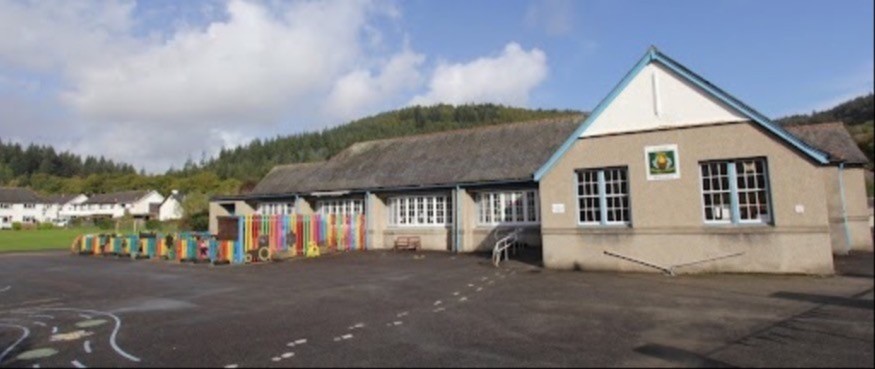
The school itself is in good condition
One of the strongest arguments from opponents is that the closure does not appear to be driven by a failing or unsuitable building.
Conwy's own consultation document describes Ysgol Betws-y-Coed as being in good condition, with no fundamental issues requiring attention.
It is a Grade II listed building and has a current maintenance backlog of around £34,300 following improvements over the previous five years, including upgraded toilets, windows and the school kitchen and canteen.
Janet Finch-Saunders has highlighted that investment, saying more than £700,000 has been spent on the school on improvements including a new kitchen, windows and plumbing.
That has fuelled concerns among opponents that closing the school so soon after significant investment represents poor value for money.
The council's position is that the condition of the building is not the central issue. Its argument is that a good building cannot justify the continued cost of running a school for such a small number of pupils.
The council says there is capacity at nearby Welsh-medium schools and that no building extensions or physical adaptations would be needed to accommodate children from Betws-y-Coed.
Its consultation identified Ysgol Capel Garmon, Ysgol Bro Gwydir, Ysgol Penmachno, Ysgol Llanddoged, Ysgol Dolwyddelan and Ysgol Pentrefoelas as potential alternatives.
However, the consultation also recognised that pupils and families could face changes to their daily routines and travel arrangements.
The council's published figures put the nearest alternative, Ysgol Capel Garmon, at around 3.1 miles and 11 minutes from Betws-y-Coed, while other options range from roughly 12 to 16 minutes by the council's estimated journey times.
Opponents have argued that journey times on rural roads cannot always be judged simply by distance, particularly during poor weather and flooding, and that parents' working patterns can make school transport more complicated.
The formal consultation ran from November 28, 2025, to January 9, 2026, after Conwy Cabinet agreed in November 2025 that consultation should begin.
Both Betws-y-Coed and Ysbyty Ifan are designated rural schools. Under the Welsh Government's School Organisation Code, there is a presumption against closing rural schools, meaning Conwy had to demonstrate strong justification and show that it had conscientiously considered viable alternatives.
The consultation nevertheless produced significant opposition.
Reports of the process said Conwy received 198 responses concerning Ysgol Betws-y-Coed, with 163 opposing closure. A petition against the proposal was also signed by 966 people.
The council's Education and Skills Overview and Scrutiny Committee subsequently did not support the closure proposals.
However, Conwy's Cabinet ultimately took a different view.
On June 9, 2026, Cabinet voted by eight votes to one to proceed with the formal closure process for Ysgol Betws-y-Coed and Ysgol Ysbyty Ifan.
Statutory notices were then published, beginning a further 28-day period during which formal objections could be made. That period ran from June 24 to July 21.
The council says representations received during that process would be considered before the final determination.
The Betws-y-Coed controversy comes against a wider backdrop of falling pupil numbers and difficult decisions about the future of small rural schools.
Conwy has been examining its school estate and has identified a need to address surplus capacity and ensure education resources are used efficiently.
The authority has also been considering the future of Ysgol Ysbyty Ifan, which has capacity for 40 pupils but also had only 14 pupils in January 2025.
For supporters of the schools, however, the argument is about more than pupil numbers and budgets.
They see a village school as part of the infrastructure that helps sustain a rural community, attract and retain families and maintain a sense of identity.
That is particularly significant in areas where housing pressures, second homes and holiday accommodation are already concerns.
For Conwy Council, the challenge is balancing those community considerations against its responsibility to provide sustainable education services with finite resources.
Janet Finch-Saunders says the decision will have a “devastating impact” on the community and pupils.
She has criticised the Council Leader's refusal to intervene and is continuing to call for the closure to be reconsidered.
She said: “The Council Leader’s lack of action to prevent this closure is deeply disappointing. It is vital that Conwy County Borough Council reconsiders this decision, and I will continue to call for immediate action to be taken to prevent this closure, which will severely disrupt the local community.”
The council, meanwhile, maintains that the priority is ensuring children affected by any closure are supported into alternative Welsh-medium provision.
The dispute therefore reflects a difficult question facing many rural authorities: how do you protect the role of a village school at the heart of a community when the number of children using it has fallen so dramatically and the cost of educating each pupil has risen to exceptionally high levels?
For Ysgol Betws-y-Coed, that question has now moved beyond consultation and into the final stages of the statutory closure process.