September 01, 2026 - 560 views
A North Wales woman whose mum died just 12 weeks after being diagnosed with pancreatic cancer is sharing her family's story as a world-first breath test for the disease begins being trialled at Wrexham Maelor Hospital.
Louise Dale, from Gresford, hopes the research could eventually help thousands of other families avoid the devastating experience of losing a loved one to pancreatic cancer.
Wrexham Maelor is the first hospital in Wales to join the UK-wide clinical trial, which will involve more than 6,000 people whose diagnosis is not yet known. The trial opened at the hospital on August 27.
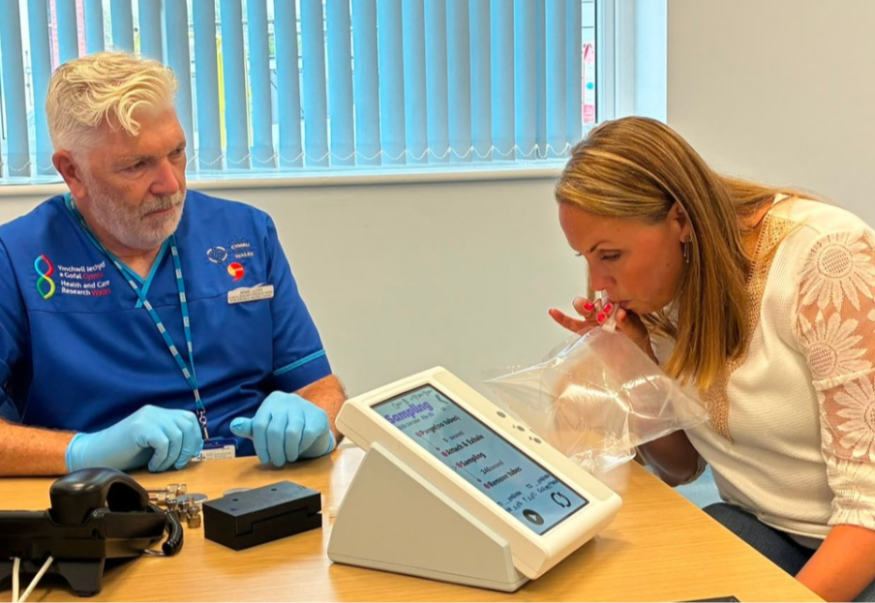
The test uses a breathalyser-like device to look for chemical changes in a person's breath which could indicate pancreatic cancer, including when the disease is at an early stage.
Louise's mum, Carol Purchase, was diagnosed with pancreatic cancer in March 2024. She died just 12 weeks later, aged 69, only eight days before her 70th birthday.
Carol had experienced indigestion and stomach pain for around a year before her diagnosis, but the symptoms were initially attributed to stress. Her appetite later changed and she began losing weight rapidly.
Several tests failed to provide a clear answer. An ultrasound eventually resulted in a referral for a CT scan, but the family was told they would have to wait three weeks.
As Carol's pain became severe, her family decided to pay for a private CT scan. It revealed that she had pancreatic cancer.
Carol remained hopeful that she would be well enough to undergo chemotherapy and spend more time with her family. She managed one round of treatment but became too unwell to continue and died shortly afterwards.
Louise said the possibility of a simple breath test being used to identify people who need further investigation could make a huge difference.
“Losing my mum so quickly to pancreatic cancer changed our family forever,” she said.
“As someone from Wrexham who knows how devastating the disease is, it means so much to know our community is helping to improve the future for other families who face it.”
Around 529 people in Wales are diagnosed with pancreatic cancer each year, but there is currently no screening or early detection test for the disease.
Its symptoms can be vague and may resemble a range of other conditions, making it difficult for doctors to determine which patients need urgent investigation.
The new test is designed to detect volatile organic compounds, or VOCs, in a person's breath. These compounds are produced by the body and travel through the bloodstream before being filtered through the lungs and exhaled.
Scientists have found that people with cancer can produce different combinations of VOCs. By identifying patterns associated with pancreatic cancer, researchers hope the test could eventually help GPs identify patients who need urgent scans and further investigation.
The test takes around 30 seconds to complete and is designed to be non-invasive and suitable for use in settings such as GP surgeries or pharmacies.
Researchers believe results could potentially be available within three days, allowing patients considered to be at higher risk to be referred quickly for further tests.
The Wrexham site is part of a major clinical trial backed by more than £1.1 million from Pancreatic Cancer UK. The charity says the study is an important step towards establishing whether the technology could eventually be adopted by the NHS.
Duncan Stewart, Consultant Surgeon at Betsi Cadwaladr University Health Board, said the involvement of Wrexham was an important milestone.
“Patients from North Wales will play a vital role in helping to evaluate an innovative breath test which has the potential to support earlier diagnosis in the future,” he said.
Professor George Hanna, who leads the Imperial College London research team behind the test, said an earlier two-year study involving more than 700 breath samples from people with pancreatic cancer, other pancreatic conditions and no cancer had produced encouraging initial results.
The latest trial will test whether those findings can be replicated in people whose diagnosis is not yet known.
For pancreatic cancer patients, earlier diagnosis can be particularly important because surgery is currently the only potential cure, but many people are diagnosed when the disease is already advanced.
Louise believes her mum would have welcomed the opportunity to take part.
“Mum would be incredibly proud that Wrexham is the first hospital outside England to take part in this trial,” she said.
“I believe she would have welcomed the chance to participate if it had been available when her symptoms began, especially knowing it could help other people in the future.”
Pancreatic Cancer UK chief executive Diana Jupp said the trial could represent a major step towards earlier detection.
The Imperial College London team ultimately hopes to develop a broader breath test capable of detecting and distinguishing between several gastrointestinal cancers, including pancreatic, oesophageal, gastric, liver and colorectal cancers.
For Louise and her family, however, the research has a more personal meaning – turning the experience of losing Carol into the hope that other families might have more time with the people they love.