August 05, 2026 - 341 views
The National Eisteddfod has once again showcased the very best of Welsh language, culture and creativity, with a week packed full of competitions, ceremonies, performances and major announcements attracting thousands of visitors to the Maes.
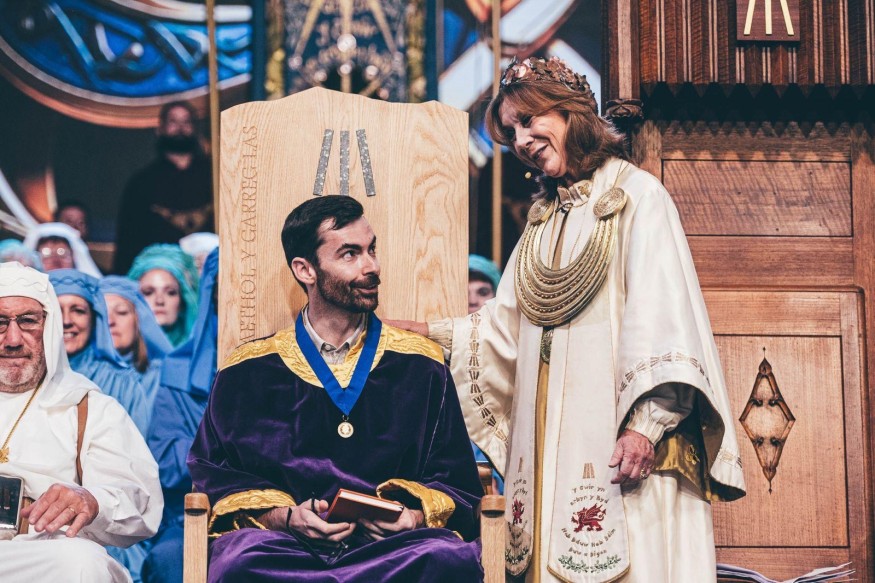
Among the biggest moments so far has been the crowning and chairing ceremonies, the unveiling of a historic Welsh-language version of Star Wars: A New Hope, and the launch of a new Welsh Government consultation on a 10-year strategy for culture, sport and the creative industries.
North Wales has also enjoyed a successful week.
One of the festival's most prestigious literary honours, the Prose Medal, was awarded to Anglesey author Gareth Evans-Jones, whose winning work was chosen from a record-breaking field of 28 entries. Judges described the standard as exceptionally high and said the future of Welsh-language prose was "very bright indeed".
Originally from Traeth Bychan, near Marian-glas, Gareth is now a lecturer at Bangor University and is already well known in Welsh literary circles, having previously won the National Eisteddfod Drama Medal twice. His latest success adds another major accolade to an impressive career spanning novels, poetry, children's books and theatre.
As the Eisteddfod enters its penultimate full day on Thursday, attention turns to another packed programme celebrating achievement across science, literature, music and drama, with several North Wales organisations and performers taking centre stage.
The first major ceremony sees the presentation of the Dr Glyn O Phillips Medal, recognising an outstanding contribution to science and technology through the medium of Welsh. The award honours the late Dr Glyn O Phillips, who came from Rhosllannerchrugog and was the first recipient of the medal in 2004.
Later in the afternoon, the Playwright's Medal will be presented, with the winner receiving not only a £3,000 prize but an extensive package of mentoring and development opportunities through a partnership involving leading Welsh theatre companies.
North Wales is strongly represented in that partnership through Bangor-based Frân Wen, Theatr Bara Caws, and Mold's Theatr Clwyd.
Frân Wen will also stage its popular One-Night Theatre production on Thursday evening, where a team of performers create and stage an entirely new production in just 24 hours. Meanwhile, Theatr Bara Caws will perform Dadra as part of the evening programme.
Music takes centre stage in the Pavilion with the Osborne Roberts Memorial Prize, one of the Eisteddfod's most prestigious competitions for young solo singers. Celebrating its 75th anniversary this year, the competition has launched the careers of many of Wales' leading voices, while former winner Trystan Llŷr Griffiths returns to adjudicate the contest.
Another musical highlight promises to be Atgof o'r Sêr (Memory of the Stars), first performed at the National Eisteddfod in Denbigh in 2001. The performance reunites eight former Eisteddfod winners under the baton of acclaimed North Wales composer Robat Arwyn.
Elsewhere, learners of Welsh will discover the winners of the Learners' Chair and Learners' Prose competitions, while successful competitors in the festival's written competitions will receive their awards during a special ceremony in Maes D.
After Thursday, there will be just two days remaining before this year's National Eisteddfod draws to a close with its traditional final ceremonies.
The festival will then move to Rhondda Cynon Taf in 2027, where Wales' largest celebration of language, literature, music and the arts will continue its proud tradition for another year.