August 17, 2026 - 645 views
A new Welsh-language opera telling the story of one of the most controversial acts in the history of Welsh nationalism is to tour Wales to mark the 90th anniversary of the Penyberth fire.
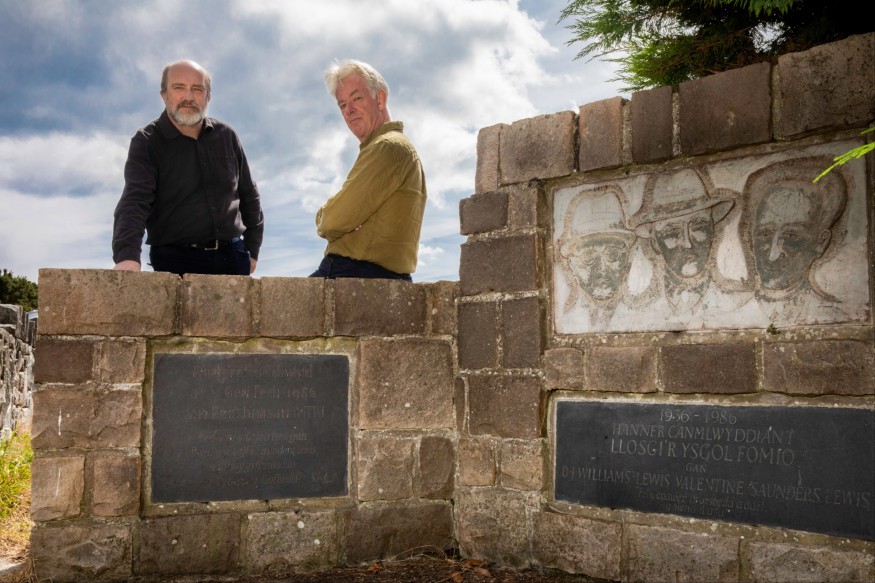
On September 8, 1936, three prominent Welsh nationalists – Saunders Lewis, Lewis Valentine and D.J. Williams – set fire to buildings at RAF Penrhos near Pwllheli in protest against the destruction of Penyberth farmhouse to make way for the airbase.
The three men later drove to a nearby police station and handed themselves in.
They were eventually tried at the Old Bailey after a jury at Caernarfon Assizes failed to reach a verdict, and were sentenced to nine months in prison at Wormwood Scrubs.
Their release was greeted by supporters in Wales, with around 15,000 people turning out in Caernarfon to welcome the three men home.
Now, nine decades after the fire, Welsh-language opera company OPRA Cymru has commissioned acclaimed Anglesey composer Gareth Glyn to bring the dramatic events to the stage.
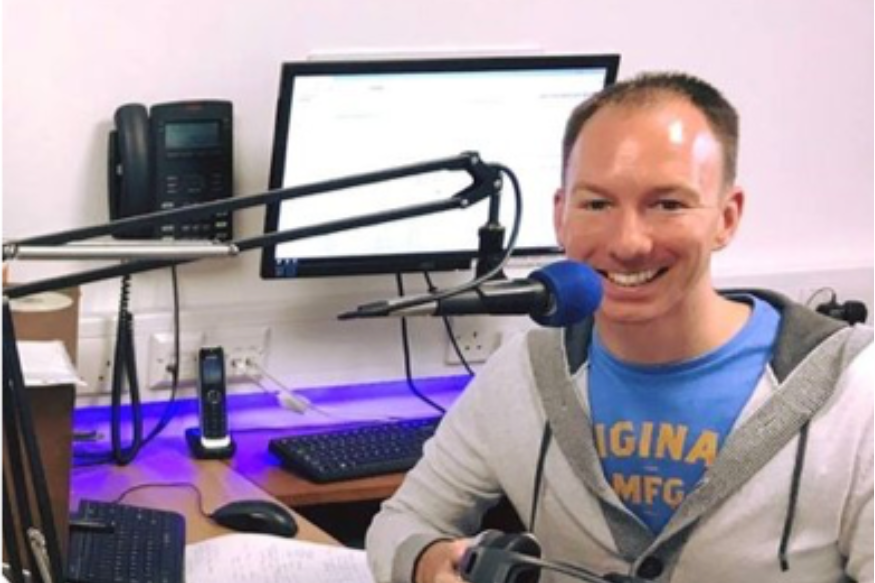
Fflamau Penyberth (Flames of Penyberth) has a libretto by OPRA Cymru founder Patrick Young, from Llan Ffestiniog, written in collaboration with Caernarfon author and historian Arwel Vittle.
The opera will receive its world premiere at Neuadd Dwyfor in Pwllheli on November 19 before embarking on a tour of venues across Wales.
Patrick Young said the production would commemorate an event which had a lasting impact on the Welsh language and the country's nationalist movement.
“Gareth Glyn returns to work with OPRA Cymru to retell the extraordinary story of three God-fearing men who set fire to an airbase before they hand themselves in to police,” he said.
The story begins with one of the central figures behind bars, before moving backwards through the events which led to the fire.
Arwel Vittle, whose book Cythral o Dân recounts the events and the political turbulence surrounding them, said the opera would explore the protests, planning, court cases and imprisonment which followed the fire.
“There were protests and meticulous planning before the act itself and the subsequent court cases in Caernarfon and the Old Bailey and their imprisonment,” he said.
He said some artistic licence had been used in adapting the story for the stage, including condensing some events, but that the historical premise remained accurate.
Penyberth itself had a deep cultural and historical significance in Wales. The farmhouse had been home to generations of patrons of poets and had also served as a stopping point for pilgrims travelling to Bardsey Island.
Plans to demolish it to make way for RAF Penrhos sparked widespread protests across Wales.
The airfield was intended to operate as an air observer, gunnery and bombing school, but opposition to its construction became a defining moment for the fledgling Plaid Genedlaethol Cymru, the forerunner of today's Plaid Cymru.
The three men at the centre of the story went on to become significant figures in Welsh political and cultural life.
Lewis Valentine, who was born in Llanddulas near Colwyn Bay, was a Baptist minister, politician, author, editor and Welsh-language activist. He became the first leader of Plaid Cymru after its formation in 1925.
Saunders Lewis, born into a Welsh-speaking family in Wallasey, became one of Wales's most influential writers, poets and political thinkers.
His 1962 radio broadcast Tynged yr Iaith – The Fate of the Language – warned that the Welsh language faced extinction unless urgent action was taken. The speech helped inspire the formation of Cymdeithas yr Iaith Gymraeg, the Welsh Language Society.
D.J. Williams, from Rhydcymerau near Llanybydder, was a prominent Welsh-language writer and nationalist and was also among the founders of Plaid Cymru.
The new opera features a cast of prominent singers, with tenor Robyn Lyn Evans and baritones Emyr Wyn Jones and Robin Gruffudd Hughes taking leading roles.
Patrick Young said the three singers had all worked with OPRA Cymru previously and would bring considerable experience to the production.
The tour will open at Neuadd Dwyfor, Pwllheli, on November 19, followed by performances at:
Theatr y Stiwt, Rhosllannerchrugog – November 20
Pontio, Bangor – November 24
Taliesin Arts Centre, Swansea – November 26
Memo Arts Centre, Barry – November 27
Theatr Brycheiniog, Brecon – November 28
Theatr y Werin, Aberystwyth – December 3
Neuadd Dwyfor, Pwllheli – December 5
Further information about the production and tickets is available through OPRA Cymru and the individual theatre box offices.
The production promises to revisit a defining and still-debated episode in modern Welsh history, bringing together music, drama and the Welsh language to explore why three men were prepared to take such a dramatic step – and the impact their actions would have on the future of Welsh nationalism and the language.