April 20, 2026 - 1206 views
Residents across rural Conwy have launched a fierce backlash against controversial plans to build a cluster of giant wind turbines on a prominent ridge – with the proposed structures set to tower above even the iconic Blackpool Tower.
The scheme, which has only recently come to light, would see five turbines standing at around 180 metres erected on Mynydd Tryfan, overlooking communities between Bryn Rhyd yr Arian and Bylchau. If approved, they would become the tallest onshore turbines ever constructed in North Wales, rising roughly 20 metres higher than Blackpool’s famous skyline feature.
Anger has been building rapidly among locals, many of whom say they were left in the dark despite claims the project has been under discussion for up to a year. In response, a protest group has quickly formed, vowing to challenge the development amid concerns over noise, environmental damage, and the visual impact on what residents describe as an unspoilt landscape.
Tensions were laid bare at a packed meeting in Llansannan Village Hall, where more than 200 people gathered, with dozens left standing. The meeting, led by local GP Dr Steve Newton, marked the beginning of an organised campaign against the proposals.
Dr Newton said the first many residents knew of the scheme was when it surfaced unexpectedly at a council planning meeting earlier this year. Since then, campaigners have moved swiftly, distributing hundreds of leaflets and canvassing homes across the area.
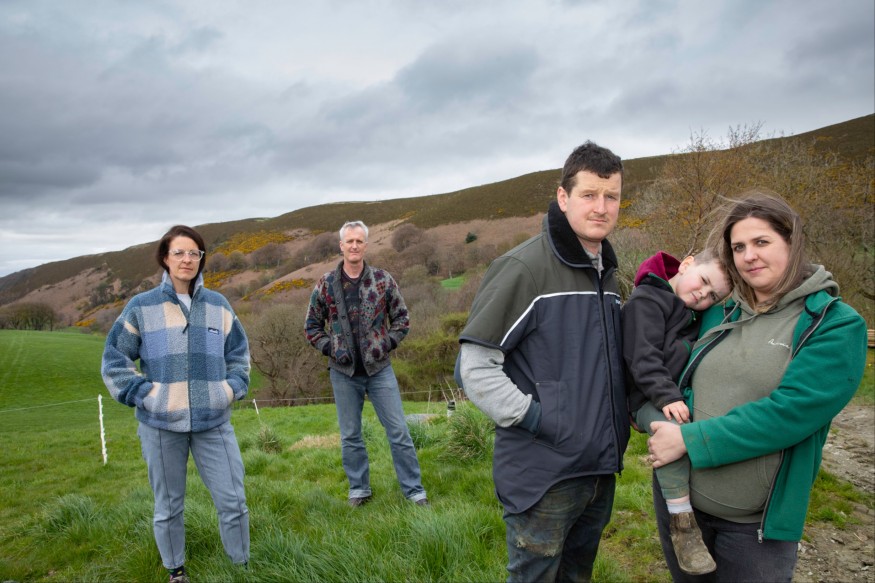
Among those most directly affected is farmer Tomos Griffiths of Tan Tryfan Fawr, whose family has worked the land for generations. He fears the turbines, planned for the ridge above his farm, would dominate daily life.
Standing on his land, he points out that on a clear day you can see Blackpool Tower in the distance – but says the turbines would be even taller and far closer.
He warned that constant noise and the looming presence of the structures would fundamentally change the character of the area, adding that while smaller turbines exist nearby around Llyn Brenig, these proposals are on a completely different scale.
Residents are also worried about the infrastructure required to connect the site to the grid, with fears that large pylons could carve through the countryside.
On the opposite side of the ridge, long-time resident Hywel Jones fears the development could set a precedent, opening the door to further expansion.
Others, like Kate Wright, who lives in a converted farmhouse close to the proposed site, say the uncertainty is already taking a toll. She described the plans as “very stressful,” raising doubts about how such enormous structures could even be transported along narrow rural lanes.
Adding to the frustration is the planning process itself. Because the project is classed as a Development of National Significance, it will be determined not by the local authority but by Planning and Environment Decisions Wales (PEDW).
Campaigners argue this removes meaningful local input and accuse decision-makers of sidelining the very communities most affected.
Dr Newton also questioned the timing, suggesting developers are racing to submit plans before changes to legislation in 2027 alter the thresholds for such projects. He claims the scheme may be linked with another proposed site in Gwytherin in an attempt to meet current criteria.
The group is now working with countryside charity Campaign for the Protection of Rural Wales (CPRW) to seek expert advice, while continuing efforts to rally opposition.
For many in the area, the battle is only just beginning.
“The fight starts here,” Dr Newton said. “People are horrified by what’s being proposed – and determined to make their voices heard.”