April 01, 2026 - 1144 views
Residents across North Wales are being urged to take part in routine bowel screening as Bowel Cancer Awareness Month begins, following the experience of a local man whose cancer was detected early thanks to a home test.
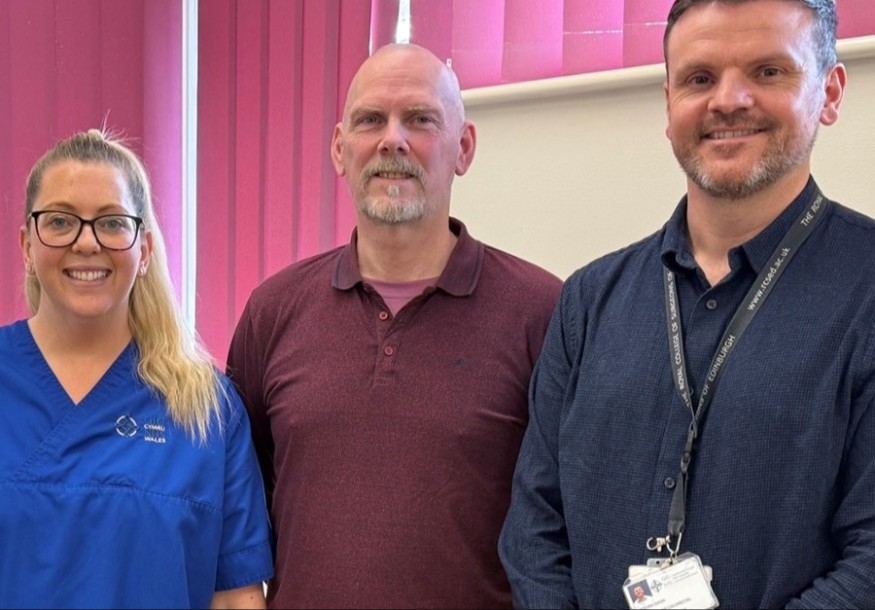
Richard Hobson, 58, from Higher Kinnerton, was diagnosed with bowel cancer just a week before Christmas 2025 after completing a routine screening test at home.
After returning his test kit, Mr Hobson was invited for a colonoscopy, where doctors identified the cancer. He was placed under the care of Consultant Colorectal Surgeon Mr Steve Dixon at Wrexham Maelor Hospital, who confirmed he would need surgery to remove it.
“I’d done a routine test two years earlier and everything was normal, so it was a shock,” said Mr Hobson. “But that just shows how important it is to keep taking part when you’re invited.
“People can worry that the worst is going to happen, so they put it off. But if it’s caught early, you have the best chance. The healthcare available now is fantastic – I was so impressed with the care I received.”
Mr Hobson underwent surgery around four weeks after his diagnosis. In the lead-up, he took part in a prehabilitation (prehab) programme, designed to help patients improve their fitness ahead of surgery.
“The prehab programme was brilliant and made a real difference. It helped me feel stronger and more prepared going into the operation,” he added.
He was offered robotic-assisted surgery at Ysbyty Gwynedd, carried out by Mr Dixon. After spending almost a week in hospital, Mr Hobson has made an excellent recovery and now requires no further treatment, with routine surveillance planned over the next five years.
Mr Hobson praised the care he received across both hospitals and is now encouraging others not to ignore their screening invitation.
“I nearly put it off, but I’m so glad I didn’t. If sharing my story encourages even one person to do the test, it’s worth it,” he said.
Mr Dixon explained that Mr Hobson’s cancer was identified at a very early stage through the screening programme.
“This was a polyp cancer, which means it was detected before it had penetrated the bowel wall or spread elsewhere,” he said. “Cancers found through screening are often at an earlier stage, which significantly improves outcomes and reduces the likelihood of recurrence.
“It’s incredibly important that people take up the offer of screening when invited, as it allows us to identify and treat these cancers early.”
“It’s also important that people are aware of potential symptoms of bowel cancer. These can include blood in your stool, a persistent change in bowel habits such as diarrhoea or constipation, unexplained weight loss, or ongoing abdominal pain. If you notice any of these symptoms, you should contact your GP as soon as possible to get checked.”
Mr Dixon also highlighted the benefits of robotic surgery, particularly for certain types of bowel cancer.
“Robotic-assisted surgery can be particularly effective for left-sided bowel cancers. It offers enhanced precision and improved visualisation for the surgeon, which can support better outcomes for patients. We’re very pleased with Mr Hobson’s progress and recovery.”
Bowel screening in Wales is offered to people aged 50 to 74, with home testing kits sent every two years. The test is quick, simple and can be completed in the privacy of your own home. It looks for tiny traces of blood in your stool, which can be an early sign of bowel cancer.
Health professionals are encouraging anyone who receives a screening kit to complete and return it as soon as possible.
Taking part in screening can help detect bowel cancer at an early stage, when treatment is more effective and survival rates are significantly higher.
For more information about bowel screening, visit the Public Health Wales website.